
The math runs on a decimal-precision engine, validated across 30 exit values, so the number you see is the number that settles.
The headline price isn't your check
“We sold for $50,000,000.00” is a great line at the party. It is not what lands in your account. Before common stock sees a cent, investors take their liquidation preference, and if their preferred participates, they take a share of what's left on top. The gap between the headline number and the founder's check is often much larger than founders expect.
Then there's the next round, which dilutes you again, and the option pool, which is part of the story too. The honest question is the simple one: if we sell for $X, after all of that, what the team and I actually walk away with.
See exactly where your money goes
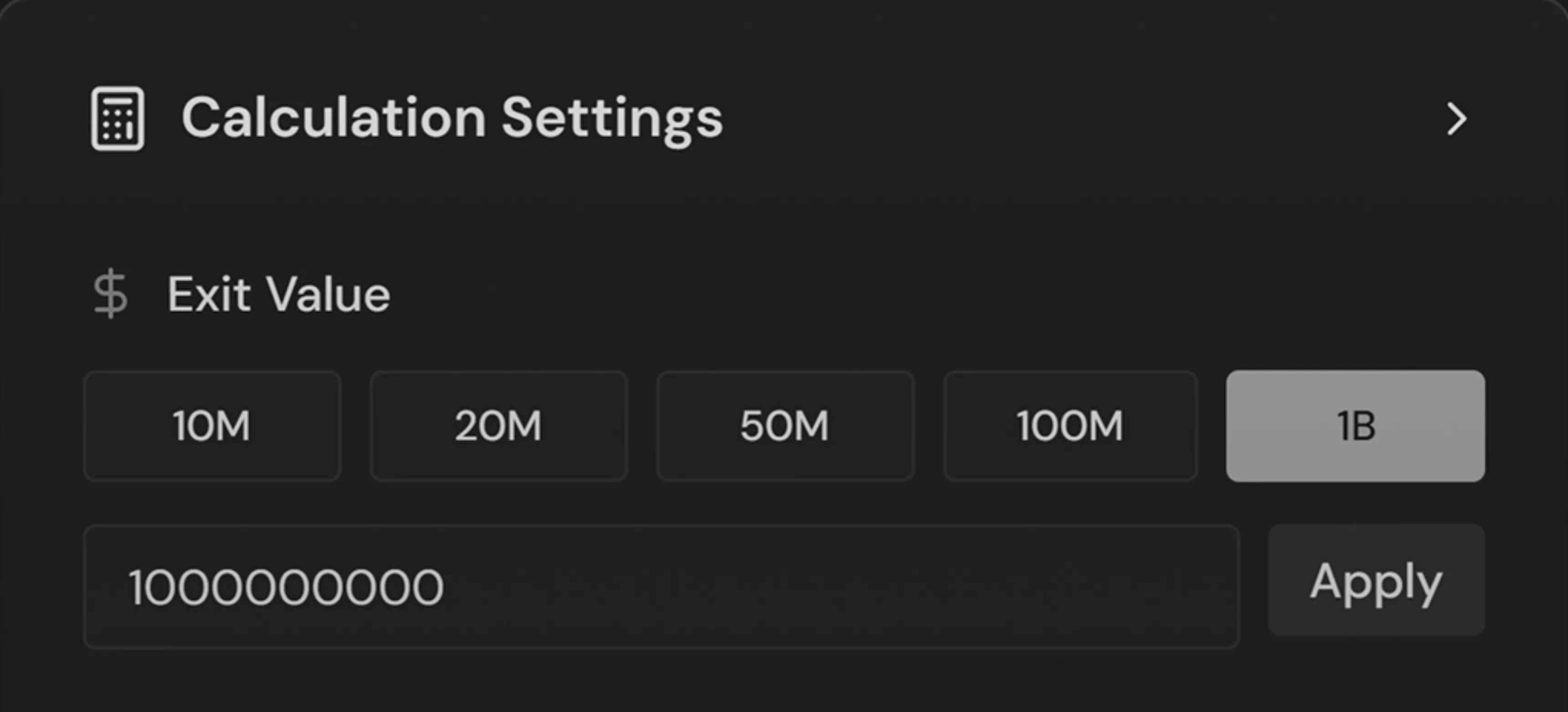
Start from a template, set an exit value, and Waterfalls shows how the price flows through the cap table step by step: liquidation preferences first, then participation, then common. You see the dollar gap between the headline price and your take-home, laid out tier by tier, not buried in a formula.
It's learning by doing: change the exit value and watch the split move. If you want the concepts behind it, start with preferred vs common stock, the difference that decides who gets paid first.
Built to answer your questions
Model the things that actually move your number:
Why the number is right
A founder payout figure is only useful if it's correct. Waterfalls computes distributions on decimal-precision math (to the cent, with no floating-point drift) and every result enforces the obvious rules: the whole exit value is accounted for, and no one's payout goes negative.
The engine is backed by 303 automated tests and validated against an independent finance firm's model across 30 exit values. And because every step is shown, you don't just get a number: you see exactly where your money goes, with none of the scary, silent errors a spreadsheet hides.
Free to start, your data kept
Your cap table is sensitive, so it's treated that way: modern authentication, per-account data isolation with row-level security, and billing handled by a Merchant of Record.
Start free with no credit card. Pick a template, change the exit value, and get an answer in seconds. Upgrade or cancel anytime, and your projects are always kept.
Questions Founders ask
If my startup is acquired, what do I actually get?
Depends on the preferences ahead of you. Waterfalls models exactly how the sale price flows through liquidation preferences and participation before common, so you see your real take-home, not the headline number.
How much do liquidation preferences cut into my payout?
Often more than founders expect. Investors take their preference (and participation, if any) first; common splits what remains. Waterfalls shows the dollar gap step by step across the whole cap table.
Can I see how the next round dilutes me?
Yes. The fundraising mode models a new priced round and shows post-money valuation, price per share, and per-stakeholder dilution before and after.
Is there a free version?
Yes. The Free plan needs no credit card and has no time limit. Pick a template, change the exit value, and get an answer in seconds. Your projects are always kept.

See your real take-home
Model your exit in minutes and see what you walk away with after preferences. Start free with no credit card, cancel anytime, and your projects are always kept.
No credit card · cancel anytime · your data is always kept.
your investors' preferred · your finance lead · see plans and pricing · how we keep the math right